Load Management: The Middle Path Between Sizes
Between the smallest home units and a whole-home standby sits load management: modules that watch the generator's capacity and briefly shed the largest loads, usually the air conditioner compressor, when everything starts at once. That trick lets a mid-size generator carry a house that would otherwise demand the next size up.
For Robertson County properties on wells, load management deserves special respect: the well pump is both essential and one of the heaviest starting loads in the home. We sequence pump, HVAC and water heater starts deliberately, so an outage night feels boring rather than precarious.
Generator Repair: When the Backup Fails Before the Outage Does
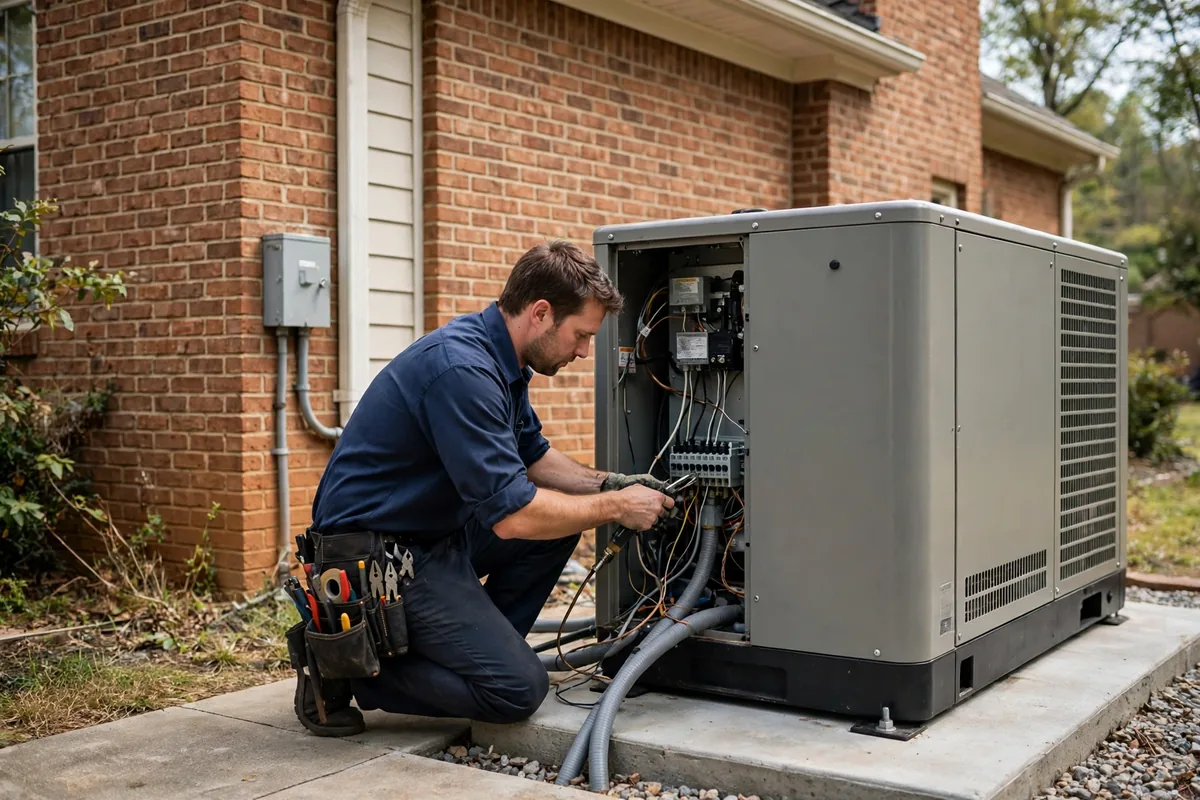
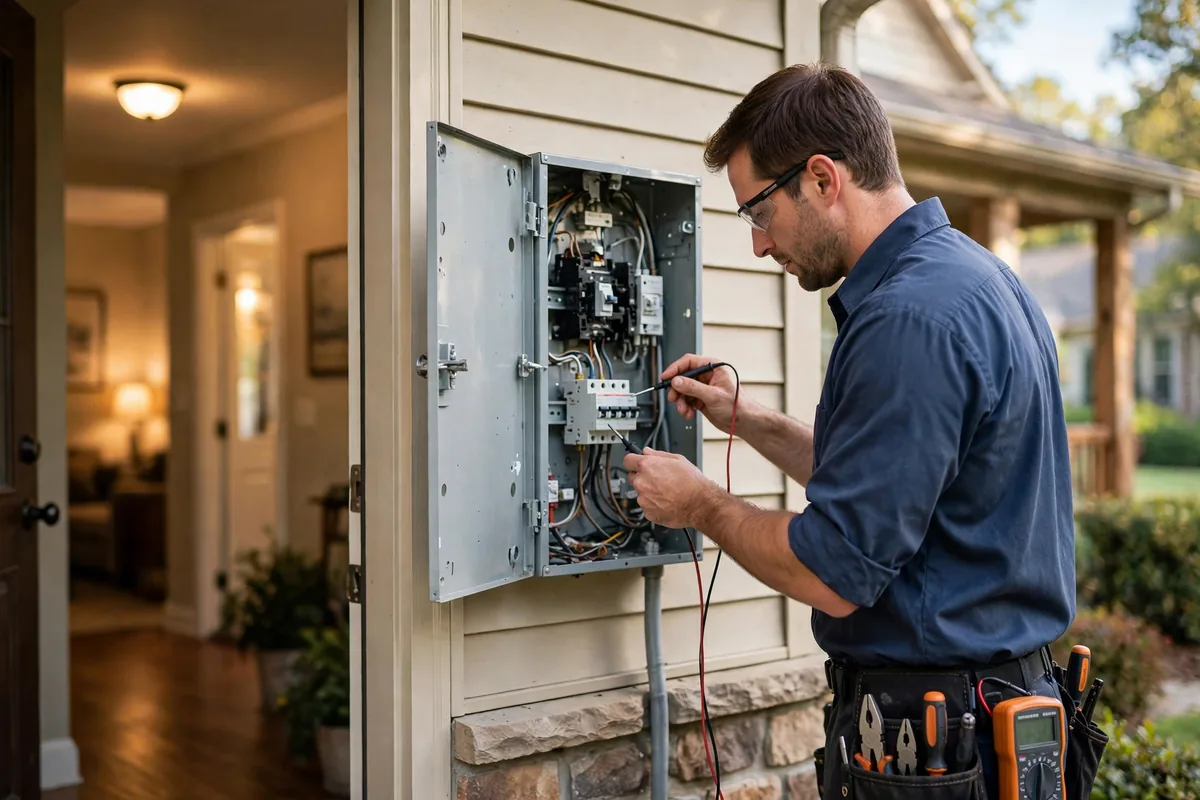
A home generator earns its keep a few nights a year, which is exactly why failures hide until those nights. The repair calls follow a pattern: the unit failed its weekly exercise, cranked without starting, transferred late, or ran but never carried the house. Our repair scope is the electrical system around and inside the installation: switchgear and control faults, battery and charging-circuit failures, sensing wiring, and the connections where generator output meets your panel. When diagnosis lands inside the engine itself, we say so and point you to the engine side with our test results in hand.
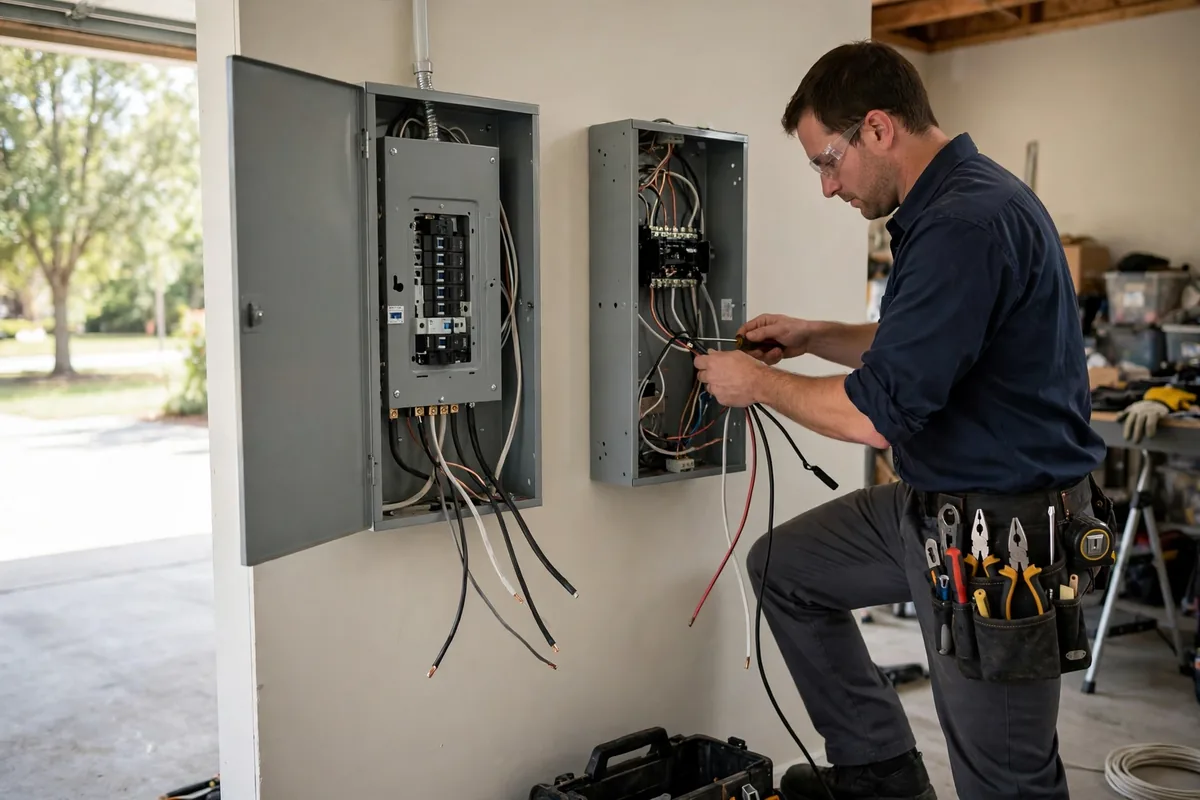
Hookups for carry-out units get repaired here too: damaged connection boxes, worn generator cords, interlock plates that no longer seat, and switch contacts pitted from years of test transfers. The most searched version of this problem, an electric generator that will not power the house during an actual outage, is usually a connection or control fault rather than a dead generator, and it is diagnosable in one visit.
Fuel, Placement and Runtime: The Half of the Job Outside the Panel
The machine is a small power plant, and its non-electrical half decides how it behaves at 2 AM in February. Fuel supply (natural gas pressure at full load, or propane tank sizing for multi-day runs) is coordinated with your gas provider, because a generator starved of fuel under load surges and stalls exactly like an electrical fault. Placement follows clearance rules: distance from windows, doors and vents so exhaust can never drift indoors, plus a level pad and room for service access on every side.
Runtime expectations deserve plain talk. Air-cooled home units are built for outages measured in hours to a few days with sensible load choices, not for running a whole house at full summer tilt for a week. Cold Robertson County snaps thicken oil and test batteries, which is why the maintenance schedule weighs winter readiness so heavily. We walk these realities during sizing, because the cheapest generator is the one whose limits you learned before the ice storm, not during it.
Under the Enclosure: What a Complete Care Schedule Actually Touches
Under the enclosure sits an engine that happens to make electricity, and its care schedule reads like one. Oil and filter changes follow run-hours, not calendar pages, because an outage-heavy season ages a machine faster than a quiet year. Air filters clog with the same Tennessee pollen that coats every porch in April. Spark plugs, valve clearances on larger units, coolant level and condition on liquid-cooled models, drive belts, and battery electrolyte or terminal condition all sit on the manufacturer's schedule, and skipping them converts directly into no-start calls during ice season.
Our maintenance work covers the electrical half of that schedule: charging system output, battery load testing, control wiring, switching operation under load and connection torque. The engine half belongs to the manufacturer's service schedule, and we will tell you when a symptom we find (hard starting, rough running, oil consumption) points there rather than guessing at it. A machine whose two halves are both maintained is the one that starts on the coldest night of the year without drama, which is the entire reason it exists.
Noise, Neighbors and Where the Machine Sits
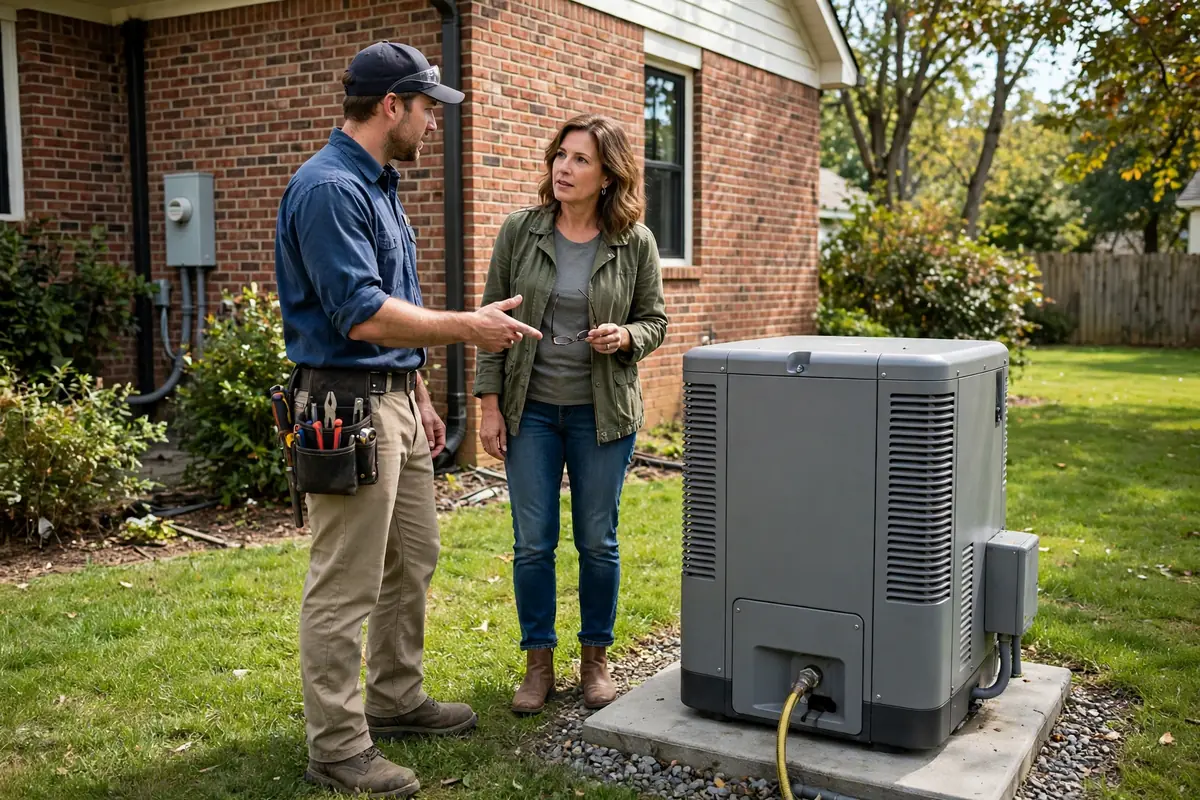
The weekly test is also a weekly sound, and placement decides whether that sound is a background hum or a neighborhood topic. Air-cooled home units run in the low-to-mid 60s of decibels at conversational distance, roughly a window air conditioner, but a unit tucked against a reflective wall or under a bedroom window sounds louder than its rating. We site machines on the home's utility side where possible, clear of bedroom windows on both properties, with the exhaust pointed away from patios and property lines.
Test-cycle timing is a courtesy setting, not a technical one: mid-morning on a weekday instead of dawn on Sunday. Landscaping screens help visually and slightly acoustically, as long as they respect the clearance the enclosure needs to breathe and to be serviced. Springfield lots vary from tight Historic District parcels to acreage out past Honeysuckle Hill Farm, and the placement conversation scales with the lot: on a small parcel, ten feet of setback and a fence line can matter more than any specification on the brochure.
Sizing in Kilowatts Without the Sales Fog
Generator sizing confuses people because motors lie on their labels. A well pump or air conditioner carries a running wattage and a starting surge several times higher, and the machine must survive the surge of the largest motor while already carrying everything else. That is why two homes with identical square footage take different sizes: the load list's motor inventory, not the floor plan, runs the arithmetic. We add starting surges in sequence order, because in real life the pump, the compressor and the water heater do not all start in the same second unless nobody planned it.
Oversizing has its own costs beyond the purchase: an underloaded engine runs cool and wet-stacks in diesel terms, and in residential terms it simply burns more fuel to make the same lights. Undersizing is worse manners but better honesty, since it announces itself immediately. The middle the load list finds (cover the essentials fully, manage the luxuries deliberately) is where Springfield homes on wells and septic systems usually land, and it is why we will talk you out of kilowatts you cannot use.
Generator Maintenance: The Schedule That Prevents Repair Calls
These machines maintain themselves only in brochures. The maintenance rhythm that actually works: exercise cycles verified rather than assumed, battery age tracked and replaced before it strands you (batteries are the single most common no-start cause), terminals cleaned and torqued, the switching gear exercised under real load at least annually, and the installation inspected for rodent nesting and moisture after storm season.
We fold generator maintenance into the same visit pattern as the rest of your electrical system: a scheduled check that loads the machine, tests the switching both ways, and leaves you a written note of battery age, exercise health and anything trending toward failure. In Robertson County, that visit belongs in autumn, before the ice season that writes most of our emergency generator calls.
What Affects the Price
Electrical installation cost depends on generator type and size, distance from the panel, switching equipment chosen and permit requirements. Fuel supply work is arranged with your gas or propane provider; we quote our electrical scope in full before starting. Our electrical cost guide breaks the pricing mechanics down further. The Ready.gov power outage guidance is the authority reference we point generator installation, repair & maintenance customers to when they want the rulebook behind a recommendation.
DIY or Call an Electrician?
Resetting a breaker a single time and testing your own GFCI devices are fair homeowner ground. So is watching: note when the symptom happens and what else was running. Opening panels, replacing breakers and chasing faults through walls are not homeowner ground, because the mistakes there stay invisible. Repeats, heat or odor mean it is time to call (615) 716-3086.
Related Services in Springfield